In South Africa today, we experience passing through boom barriers on a regular basis, be it commercial buildings, hotels, hospitals, airports, car parks, unit complexes or shopping centres. This type of automatic security barrier is the common method for controlling access and exit flow of traffic into and out of an area that is restricted.
Boom barriers are an ideal, low-cost way to monitor and control the flow of traffic in and out of your property. But there are many other benefits of boom barriers, as you’ll discover below. Boom barriers are suitable for all different types of properties, including:
Shopping centres
Airports
Commercial buildings
Hospitals
Universities
Car parks
Hotels
Industrial sites
Units, flats and apartment complexes.
WHAT IS A BOOM BARRIER?
Consisting of a long boom that lowers automatically to block the advancement of oncoming traffic, boom barriers are the simplest, yet effective automated barrier used today. To raise the boom of the barrier, the vehicle’s driver must present a credential, enter a code, pay a toll or wait for authorisation before they are able to proceed. Typically, an electric motor raises and lowers the boom, while a sensor or security access system controls the motor operation.
BENEFITS OF BOOM BARRIERS
Here are some of the benefits of boom barriers.
1. Improved Security
Today, security is so important for commercial and residential properties. By installing a boom barrier, you can approve or deny entry to vehicles entering your property based on their credentials. If you don’t want a vehicle to enter your property, they can’t.
With a boom barrier, you can also monitor and record the registration details of all vehicles that enters and leaves your property.
2. Control the Flow of Traffic
Boom barriers are the best way to control vehicles entering or exiting your property. This is important for properties with limited parking spaces.
A boom barrier also allows you to control how many vehicles are on your property at any given time. And if your car park is full, you can prevent further entry.
3. Save Money on Security Costs
A boom barrier will be a saving on cost in the long run. You will have a once-off cost to install the boom barrier security system, but once it’s installed it is very low cost to maintain.
By installing a boom barrier, you can often remove your need for security guards. This can eliminate ongoing security costs once it’s installed.
4. Make Money on Car Park Spaces
If you have a car park, a boom barrier with ticket system is the perfect way to make money. As a vehicle approaches, they will be required to take a ticket, and the boom barrier won’t let them leave until they have paid for their parking time.
5. Privacy
In residential property areas, a boom barrier can protect the privacy of the residents.
6. Efficient use of Space
As far as gates go, a boom barrier system is the most economic use of space. Swinging gates and sliding gates require a larger space. In contrast, a boom barrier only needs a small amount of vertical space for the boom to swing upwards.
7. Made to Last
Boom barriers are very durable and made to last. Boom barriers have only a few moving parts which makes them a safe effective automated security barrier. They are easy to install and maintain.
8. Easy Exit in case of Power Failure
If there is a power failure at your property, a boom gate can be manually operated and switched to open. This will allow vehicles to exit safely and swiftly.
Fuel theft is felt by businesses all over the world, with losses worth billions of dollars each year. Even for small business owners who rely on fleets to deliver their goods, where diesel skimming has become a continuous battle. This method of fuel theft often goes undetected as only small amounts of fuel are stolen at a time, but on a regular basis.
Carte Blanche also does well to showcase the level of criminality behind diesel theft in South Africa.
The Solution
For fleet owners, the proven and most cost effective way to prevent skimming would be to install advanced anti-siphoning devices, such as The Optimum and The Shield.
These devices are fitted into diesel tank openings and solves five common issues that are experienced with generic anti-siphons, namely:
Stops skimming from a full tank
Prevents siphoning
Prevents spillage
Compatible with OEM caps
Fills diesel at 140 litres per minute
For more information on fuel security, visit our page or contact us.
Transporting of goods is an essential service. The freight sector directly and indirectly influences the
livelihoods of many individuals and businesses. For South Africa, the increase of truck hijackings,
looting of vehicles and CIT (cash-in-transit) heists is putting this sector at risk. These sort of crimes
could ultimately have a knock-on effect which could lead to increased prices on goods and hurt
consumers’ pockets.
In an article post by News24, Gavin Kelly, the CEO for the Road Freight
Association (RFA), states that many companies, especially those based abroad, are already choosing
to use ports outside of South Africa for transporting their goods throughout Africa. This does not
bode well for South Africa’s already fragile economy.
The freight sector has significant challenges for combating crime, especially against criminals who
equip themselves with firearms and explosives. Beyond relying on local law enforcement, companies
need to put security measures in place to help protect the transit of their cash and goods. These act
as deterrents in the minds of criminals.
While traditional mechanical locks provide a level of security, they are not always the most effective.
A more modern approach would be to employ an Electronic Key Management System, which
enhances mechanical lock functionality.
Benefits:
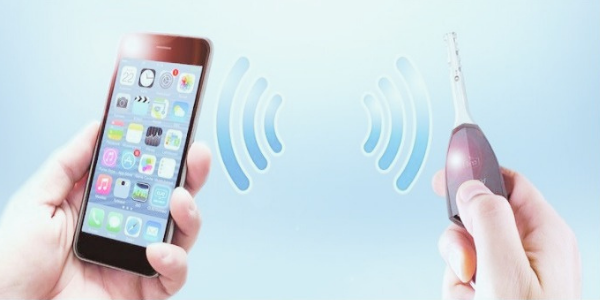
Provides wireless functionality
Maintains complete audit trails
Allows for centralised administration
Access rights can be changed
Keys can be programmed remotely
Key revalidation – a lost key is not a security risk
No cabling on the doors needed
Keeping track of goods at all times also becomes essential. This is where an Intelligent GPS Locking
System would be effective.
In the hotel industry, certain inconveniences seem unavoidable. There are fewer things more frustrating than getting off a long flight, tired and hungry with children in tow, to wait in a slow check-in line at your destination hotel. Many of us who have been stalled at the check-in desk while documents are sorted, passports photocopied, and personal details verified, and so on. Likewise, many of us are familiar with that sinking feeling of making a long walk to a guest room, only to find that the key card refuses to open the door. All of this results in the inconvenience and frustration for guests.
For any business, first impressions are vitally important. Enhancing the customer experience should be a priority to help generate recurring clientele. Even more so for hotels, with new or first-time guests.
There is technology available that can help.
BIOMETRICS IN THE HOTEL INDUSTRY
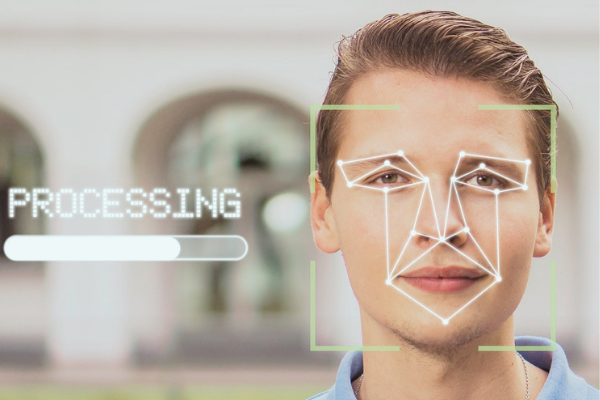
Through fingerprints, face, or iris scanning, biometric data can also be used to change the hospitality industry, creating new levels of efficiency and security. There’s little reason why Biometric Technology cannot be implemented in hotels, making processes such as check-in as swift and seamless as possible.
Rapid Check-In:
Check-in via facial recognition is already active at hotels in China. Once the guest has arrived at the hotel, there are a few options: if they are residents, they can check-in by scanning their face through the mobile app, and non-local guest’s check-in by scanning their face at kiosks located throughout the lobby.
Skipping all check-in formalities may not always been an option, but fingerprint or facial scanning can help to expedite the process. Hoteliers can also use this same functionality to manage guest access to areas of the property, by requesting fingerprints to access the pool, for example.
Easy and Secure Room Access:
Hotel room access based on biometrics offers clear benefits to both hoteliers and guests. First, by making guest rooms accessible only by fingerprint or facial scanning, it eliminates the needs to manage key card inventory and the headache of lost, stolen, or deactivated cards.
It also increases the security of the room, as only those with authorized fingerprints can access the room. If there were ever a question of room access, management would easily be able to review the log of any hotel staff using their own biometric data to enter the room, and guests can feel safer not having to worry about lost or stolen room cards.
Personalized Guest Experience:
In a survey conducted by Oracle, 41% of hotel guests were more likely to visit with greater frequency if they were recognized by an employee without having to give their name, and 62% of hotel guests believe that having this recognition would improve their experience.
The use of biometric data can help to ‘announce’ guests, their information, and their preferences without them having to provide any additional information. For example, an arriving guest can scan his fingerprint at the front desk, whereupon the concierge would then immediately have access to his personal information, his reservation and any room or service preferences, to help truly personalize the guest experience.
Quick Payments and Accurate Billing:
Requiring the use of a fingerprint to authorize any additional payments during a hotel stay, such as food and beverage orders, spa treatments, or in-room entertainment purchases, makes check-out billing quick and accurate. A bored teenager cannot keep ordering movies off the TV without the fingerprint of his parent authorizing the purchase!
Employee Management:
Biometrics are not just used to enhance the guest experience. They can also help create in-house efficiencies as well, such as with a biometric-based system to track when employees clock-in and out to help manage time tracking and attendance.
We are still in the early stages of using biometric data for the hospitality industry, but there are many ways in which it can help improve traditional processes and create efficiencies to improve the guest experience. As the population becomes more comfortable with the use of biometrics in everyday life — such as using our fingerprints or faces to unlock our mobile devices — they will come to expect that same ease of identity verification for other purchases or experiences, like travel.
Not much is known on who invented the locker, but studies suggest that the use of lockers can be traced as far back as ancient Greece, around 2,500 years ago. Even more interesting, the first lock to be operated by a key was discovered to have been used over 4,000 years in Egypt. What makes all this fascinating is that these innovations are still being used today, with the locker industry expected to reach $1.5 trillion by 2024, according to Nuesmart.
Lockers have been utilised at schools, colleges, universities, gyms, sports grounds, factories, mines, and many other facilities which, by today’s standards, seems to be the norm in basic security of personal belongings.
But can this relatively simple concept be brought into the twenty first century? It has. The quality of mechanical locks has significantly improved over time, but where the biggest innovation lies is in master key management. These locking systems now allow for a number of modern features, such as programmable keys with wireless capabilities, capturing and maintaining audit trails, granting flexible access rights, and more!
Here’s just one potential application for a modern approach to locker security:
Schools or colleges may experience problems with students leaving their locker keys at home, or even losing them altogether, which could lead to inconvenience and disruption trying access the locker. Implementing a Master Keying System for a school with 500 lockers (for example) could work as follows:
All padlocks and keys would be stamped from 1 to 500, which enables you to marry each key to the appropriate padlock.
Each padlock comes with 2 keys, one for the student, and one spare in case of lost keys.
The system also comes ‘Master Keyed’, so if a student leaves his/her key at home or loses it, one of the Master Keys, that is part of the system, will be able to open any of the 500 padlocks.
If keys need to be replaced, all that is required is the number stamped on the padlock for a key to be cut by your security provider.
Healthcare proves vital for any society. Especially during the times of a pandemic, keeping up to date with growing demands of people becomes essential to best take care of those in need. While a number of areas require attention, one such area for improvement is access control management. Healthcare facilities should look to invest in efficient access control systems to sensitive areas, such as drugs cabinets, personal protective equipment (PPE) and medical tools. This would save time for our medical professionals. While one cannot put a price on a human life, time wasted could be a life lost.
The following BBC segment showcases just how modern access control systems can improve efficiency at healthcare facilities.
Also consider the following scenario for application:
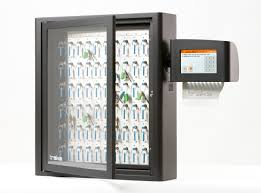
A nurse arrives at work and punches her personal pin code into the keypad to open the key cabinet. Only the key allocated to that nurse will light up and will be able to be removed. The nurse will remove the key and close the key cabinet. Each key is numbered and allocated to individual nurses on the system. There is no sharing of keys, as it’s all about accountability.
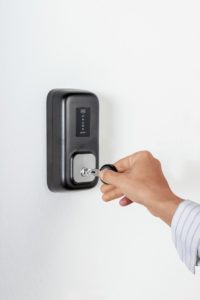
The nurse then inserts her key into the Wall Programming device positioned next to the key cabinet. This will download the access rights on to the key to all the locks the nurse will need to open during her shift. These access rights are given by the administrator on a daily, weekly or monthly basis. The main area where monitored access must be given and controlled is the drug cabinets on each ward.
On completion of the nurse’s shift, she will insert the key into the Wall Programming Device, this will send a full audit trail of all the locks the nurse has opened during her shift. The administrator will see the time and duration the nurse had opened a particular drug cabinet, as the audit trail will identify which nurse opened the drug cabinet and when. The nurse then returns her key to the key cabinet. The only reason we recommend a key cabinet is to prevent any keys leaving the hospital and getting lost or being left at home.
There is no limitation to the number of nurses that keys can be handed out to. All will have individual audit trails.
Not only does this solution solve the issues of huge loss of time and patients care due to nurses having to locate the drug cabinet key holder, but this solution will also eliminate the theft of drugs from the drug cabinets.